
A Generation Left in the Dark: The Failure to Teach Capitalism’s Virtues and Marxism’s Failures
Young voters are rallying behind figures like Zohran Mamdani and AOC, drawn to promises of socialism that sound noble but ignore history’s brutal lessons. How did we let this happen?

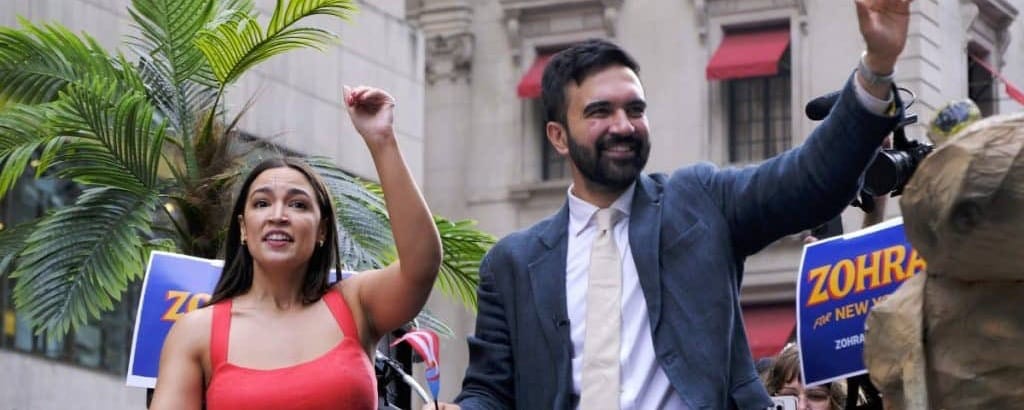
I can’t help but feel a profound sadness as I scroll through X and see the latest political trends. Young voters are rallying behind figures like Zohran Mamdani and AOC, drawn to promises of socialism that sound noble but ignore history’s brutal lessons. How did we let this happen? The answer is painfully clear: we’ve failed to educate the last several generations about the evils of Marxism and communism while neglecting to extol the virtues of capitalism. This isn’t just an oversight—it’s a tragedy with consequences we’re seeing unfold today.
Let’s start with what’s missing from our classrooms. Growing up, I learned about World War II and the Civil Rights Movement, but the atrocities of communist regimes? Barely a whisper. Where are the lessons on the Holodomor, Stalin’s engineered famine that starved millions in Ukraine during the 1930s? Or the Great Leap Forward in Mao’s China, where misguided collectivization led to 15-45 million deaths? Venezuela’s collapse under socialist policies—hyperinflation, food shortages, and mass exodus—feels like a modern case study we should be dissecting, yet it’s glossed over. These aren’t obscure footnotes; they’re the bloody reality of systems that promised equality but delivered despair.
Meanwhile, capitalism—the system that’s lifted more people out of poverty than any other—is treated with suspicion or outright disdain. I saw Robert Sterling's (@RobertMSterling) post yesterday , and he nailed it: profit isn’t a dirty word. It’s the engine of progress. As he pointed out, profit rewards risk-takers who build factories, invent new technologies, and create jobs. Without it, there’d be no iPhones, no life-saving drugs from pharmaceutical R&D, no new restaurants to enjoy. The IMF’s 2025 Economic Outlook, released last month, reinforces this—global GDP growth is still driven by market economies, with private investment conservatively accounting for more than 60% of innovation spending. Almost none of this investment would happen in a socialist economy. Yet, how many high schoolers know this?
Decades of data from the National Association of Scholars show our kids know less history than ever, with 2002 college seniors bombing at 53.5% on basic knowledge compared to 73.3% of college graduates in 1955. Today’s college seniors perform at about the level of 1955 high school graduates. Likely clueless about communism’s body count—Stalin’s famines, Mao’s mass graves—thanks to woke teachers dodging the truth! This isn’t their fault—it’s ours. Textbooks shy away from hard truths, and curriculums prioritize feel-good narratives over economic reality. Where’s the deep dive into Cuba’s rationing system or North Korea’s starvation, where people eat grass to survive? Instead, we get vague critiques of “corporate greed” without context. Capitalism isn’t perfect—inequality and occasional cronyism are real issues—but it’s a far cry from the gulags and bread lines of socialist experiments.
Look at the data. Since 1990, the World Bank reports that global poverty dropped from 36% to under 10%, thanks to market-driven growth in places like India and Vietnam. Contrast that with the Soviet Union’s collapse in 1991, where decades of central planning left shelves empty and economies in ruins. Even China’s rise since the 1980s came after it ditched Maoist policies for market reforms. Capitalism’s flaws—yes, income gaps exist—are dwarfed by its ability to adapt and innovate. Robert Sterling’s point about price signals is spot-on: they guide resources where they’re needed, something no planned economy has ever replicated without distortion.
So why the silence? Part of it is ideological. Teachers’ unions and progressive educators often lean left. Recent education trends, including AEI’s 2022 critique and 2024 surveys, suggest many social studies teachers avoid communism’s failures to avoid upsetting students—likely over half, based on self-censorship data. But that’s a cop-out. Our kids deserve the full picture. They should know that every socialist utopia—from Venezuela to East Germany—ended in stagnation or tyranny. They should also learn that capitalism, while messy, gave us the internet, modern medicine, and a standard of living unimaginable a century ago.
The rise of figures like Mamdani, cheered in that photo from yesterday’s parade, is a symptom of this neglect. Young voters see “profit” as exploitation, not opportunity, because we haven’t shown them otherwise. I’m not saying capitalism is flawless—cronyism and corporate scandals need to be addresses. But compared to the alternatives? It’s without a doubt the best we’ve got. The $37 trillion U.S. national debt, is a problem, but it’s a capitalist economy that’s kept us afloat despite it.
We need a reckoning in education. High schools should teach the history of Cuba’s failed collectivization and Venezuela’s oil wealth squandered, alongside capitalism’s role in the Green Revolution that fed billions. Colleges should stop romanticizing Marx and start analyzing why his predictions flopped—workers didn’t revolt; they prospered under market systems. Parents, we can’t wait for schools—talk with your kids, read them @tuttletwins children’s books on free markets and American history, and talk to them about how freedom, free markets, and yes, profit, built their world.
We should all lament this lost opportunity. We’ve handed future generations a skewed lens, and now we’re reaping the confusion. Capitalism isn’t perfect, but it’s better than every other system tried. Let’s teach that truth before it’s too late.
Originally posted to X https://x.com/rpetty/status/1938318617827021177


